Qualitiy Education
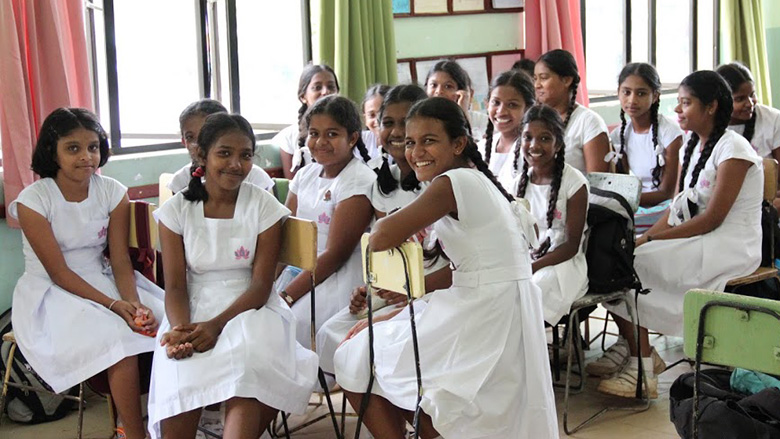
Srilanka's primary and secondary level education rate is relatively noteworthy in
comparison to other south Asian countries. However, statistics are less
impressive in secondary and tertiary education. Recognizing the role played by
education in sustainable economic and development growth, the government of
Srilanka is ready to take a measure of policy changes in the country.
"Under the Mid-term Strategic Development Programme", the country has
implemented the "nearest school the best school" program. The
prime objective of this program is to provide "equal opportunities for
education for all". Also, establishing schools as "super
schools" as chosen by Division Secretarial Division with the target of
controlling the populations in oversized urban areas. In 2013, New technology
faculties were established in four state universities to provide students with
technical and professional skills. To establish digital-based teaching and
learning, focusing in rural areas the government plans to integrate Information
and Communications Technology (ICT) in school curricula. The monitoring and
evaluation process is conducted on the basis of enhancing education policy,
planning, research, and results of the project launched by the Ministry of
education called "Development of the Education Sector in Sri Lanka".
Statistics show Srilanka needs an additional 1.6 percent of additional
investment of 2018 GDP to achieve its goals through 2030.

Climate change is
another major growing issue in this country. This country is a massive island.
The country also relies on sea products where climate change poses a threat to
its marine ecosystem. Budget cuts in maintenance for climate change issues may
result in less allocation of budget for educational purposes at the time of
growing need.
The government's
financial initiatives towards SDGs remain forever challenging. Besides, the
government's patronage, the World Bank is funding for the country since the
1980's. Other resources include various ambitious programs to help
"primary education to higher education sectors". Despite the
difficulty, the country recognizes the importance of education and power in
knowledge. Where throughout the years to the current term development in
education is in priority of this country. Thus, might be the result where it
stands at a high percentile of literacy rate as compared to neighboring south
Asian countries.
Citation:
https://www.worldbank.org/en/results/2018/10/17/three-decades-of-support-to-improve-sri-lankas-education. Accessed date 2/23/2020.
https://sustainabledevelopment.un.org/content/documents/19677FINAL_SriLankaVNR_Report_30Jun2018.pdf.Accessed date 2/23/2020.
https://www.ecns.cn/hd/2019/04/08/47308b9e5ab64a74987dfd93ae894af5.jpg.Accessed date 2/23/2020
Comments
Post a Comment